24/7 Production
Wind can produce at night and during storms, filling the hours solar cannot cover.
Hybrid microgrids for Florida facilities
When the grid goes down, your operations shouldn't. H.R. Current combines coastal wind, solar generation, and battery storage to keep critical loads running through outages and severe weather.
Power that adapts
Each part has a clear job. The controls decide when to generate, store, import, export, or island the site.
Wind turbines and solar arrays produce power together, then cover each other's quieter periods.
The battery bank holds surplus energy for evening demand, calm conditions, and fast backup.
An intelligent controller balances facility loads, utility exchange, battery health, and island mode.
Your critical equipment stays powered while the system transfers away from a failed utility feed.
Designed around wind
Solar starts the day. Wind often carries the system after sunset and during unsettled weather.
Wind can produce at night and during storms, filling the hours solar cannot cover.
Turbines can shut down rapidly in dangerous conditions, then return when operating limits are met.
A strong wind resource can deliver a higher capacity factor than solar alone at suitable Florida sites.
Visible wind generation gives customers and staff a clear sign of your renewable commitment.
Applied in the Southeast
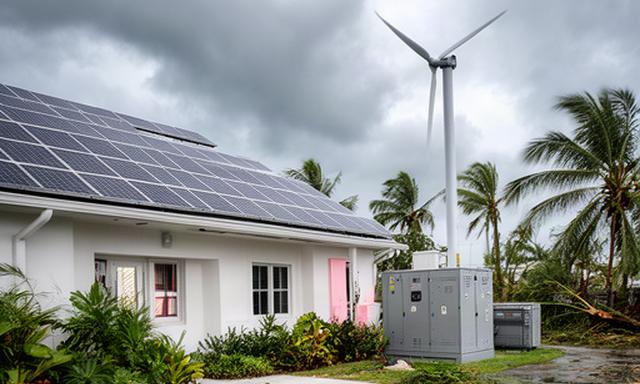
A clinic used wind generation and battery storage to maintain essential power through Hurricane Ian.
Discuss a healthcare site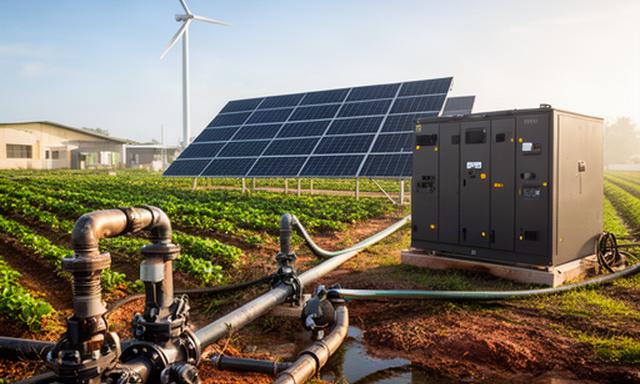
An off-grid wind-solar-battery system helped a farm cut irrigation costs by 45 percent.
Plan an agricultural system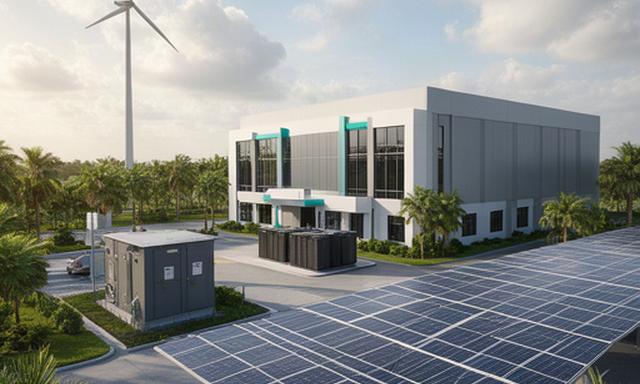
A colocation facility reached 99.999 percent uptime with a hybrid microgrid supporting its core loads.
Review a data centre siteA clear four-phase plan
Good design starts with your actual load profile. We size the system around it.
We review interval demand, outage priorities, utility tariffs, and site wind and solar resources.
We set the turbine size, PV array, battery capacity, controls, and islanding strategy.
Our installation plan protects your daily work and coordinates equipment, permits, and utility interfaces.
We test transfer sequences, confirm operating limits, and train your team before hand-off.
Make the numbers practical
Set a few operating assumptions to frame payback, demand reduction, and avoided emissions. A detailed financial proposal follows site validation.
Planning figures only. Final savings depend on tariffs, wind resource, load shape, equipment selection, incentives, and financing.
Ready for stronger energy resilience?
Talk with H.R. Current about a conceptual design and site-specific savings estimate.